

If you’ve ever looked at CS2 skins and wondered why some skins like AK-47 | Wintergreen costs a few dollars while others like AK-47 | Wild Lotus sells for the price of a car, you’re not alone. At first glance, it might seem like better-looking skins simply cost more — but the reality is far more complex.
CS2 skin prices come from three core mechanics: Steam Market fees (the Steam vs cash spread), new supply from cases, and trade-ups that set price floors. On top of that, item-specific details like rarity, float, patterns, stickers, and demand decide how expensive a specific skin gets.
In this guide, you’ll learn how each piece moves prices so you can estimate fair value faster and avoid overpaying.
Contents
- 1 Key Factors That Affect CS2 Skin Prices
- 2 Rarity: The Foundation of Every Skin Price
- 3 Float Value: Why Condition Changes Everything
- 4 Pattern and Pattern ID: The Hidden Multiplier
- 5 StatTrak™: Extra Value, But Not Always
- 6 Demand and Meta: Why Some Skins Stay Expensive
- 7 Skin Finish and Visual Appeal
- 8 Case Availability: The Long-Term Price Driver
- 9 Additional Factors That Influence CS2 Skin Prices
- 10 Stickers and Sticker Placement
- 11 Age and Release Date
- 12 Market Psychology and Hype
- 13 Seller Behavior
- 14 How CS2 Trade Ups Set Price Floors
- 15 Why Prices Can Vary So Much (Real Example)
- 16 How to Estimate a Fair CS2 Skin Price
- 17 How Steam Market Fees Create a Price “Spread” for CS2 Skins
- 18 What Causes CS2 Skin Prices to Change?
- 19 Final Thoughts: How to Avoid Overpaying for CS2 Skins
- 20 CS2 Skin Prices FAQ (Everything You Need to Know)
- 21 Why are Factory New CS2 skins so expensive?
- 22 Do stickers affect CS2 skin prices?
- 23 Can rare patterns increase a CS2 skin’s price?
- 24 Why are CS2 skins cheaper on third-party sites than on Steam?
- 25 Are CS2 cases worth opening?
- 26 Why do “trade-up food” skins rise in price?
Key Factors That Affect CS2 Skin Prices
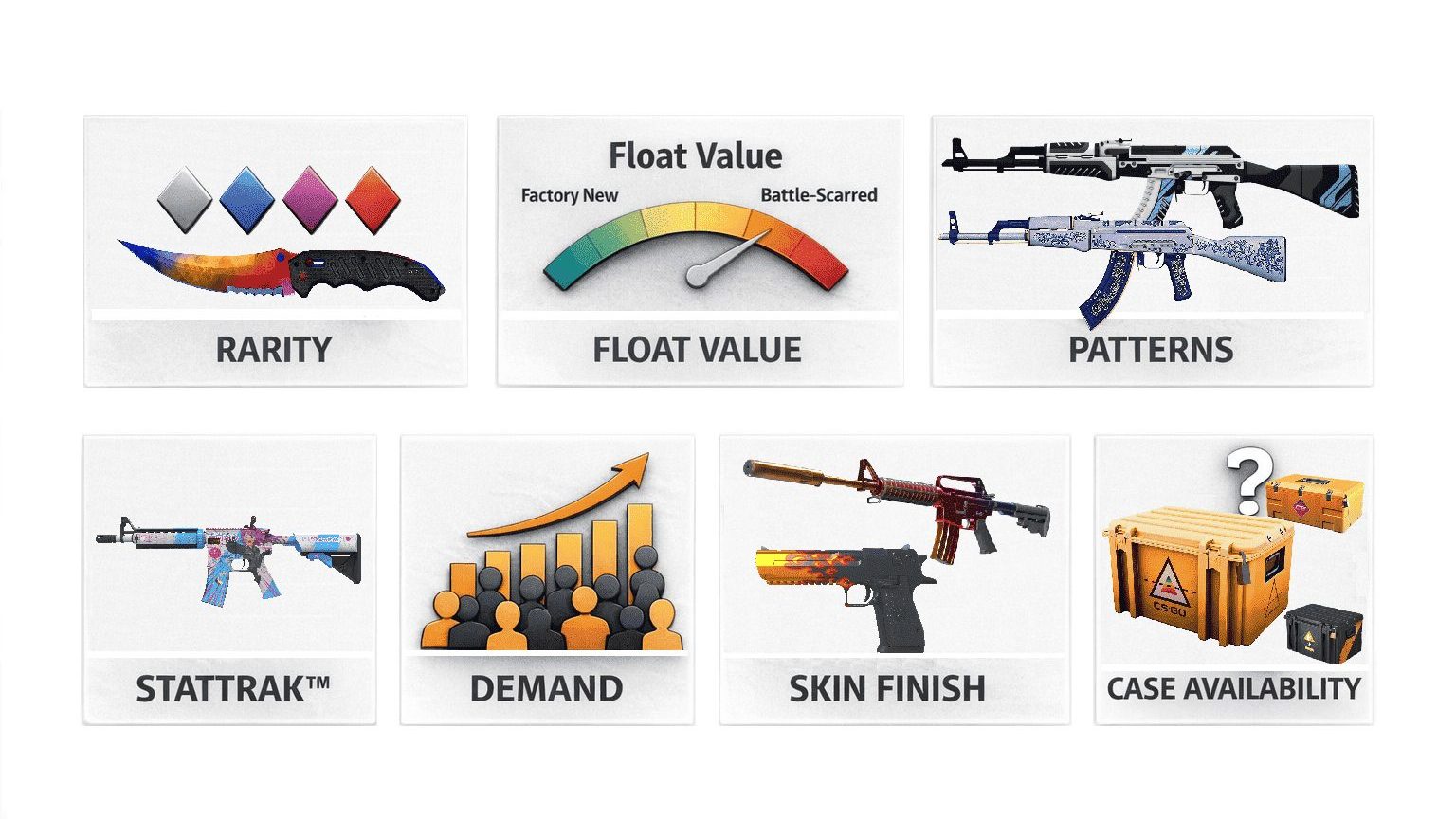
A few key things come together to decide how much a CS2 skin is worth. Stuff like rarity, condition, demand, and how available the skin is all play a part. Each one matters on its own, but it’s really the mix of all of them that determines the final price you see on the market.
Rarity: The Foundation of Every Skin Price
| Rarity Tier | Description | Typical Value Impact |
|---|---|---|
| Contraband | Removed/unobtainable skins (no longer drop) | Extremely high prices |
| Covert | Extremely rare (top-tier skins, knives/gloves) | Highest prices |
| Classified | Rare and highly desirable | High prices |
| Restricted | Less common, mid-to-high tier | Medium prices |
| Mil-Spec | Moderate drop rate | Medium-low prices |
| Industrial | Common | Low prices |
| Consumer | Very common | Lowest prices |
Every skin in CS2 is assigned a rarity tier, ranging from common Consumer-grade items to high-end Covert skins. Knives and gloves sit above standard tiers and are naturally among the most expensive items in the game.
To understand why two skins with the same name can have completely different prices, read our breakdown of CS2 skin float value, patterns, and what affects price.
Rarity determines how many copies of a skin are available. Lower-tier skins are easy to get, while higher-tier ones are much harder to come by. But rarity on its own doesn’t make something expensive — it just sets the baseline. If players aren’t really interested in a skin, it can stay pretty cheap even if it’s technically rare.
This is one of the main reasons CS2 skin prices can vary so much between different items.
Float Value: Why Condition Changes Everything
| Wear | Float Range | Price Impact |
|---|---|---|
| Factory New | 0.00–0.07 | Highest |
| Minimal Wear | 0.07–0.15 | High |
| Field-Tested | 0.15–0.37 | Medium |
| Well-Worn | 0.37–0.45 | Low |
| Battle-Scarred | 0.45–1.00 | Lowest |
The float value shows how worn a skin looks in-game. It runs on a scale from 0.00 to 1.00, where lower numbers mean the skin looks cleaner and less damaged.
Because appearance matters to players and collectors, lower float skins usually sell for more. The difference can be significant — sometimes two versions of the same skin differ in price by hundreds or even thousands of dollars purely due to condition.
For higher-tier skins in particular, float becomes one of the biggest price drivers. This is a key factor in understanding how CS2 skin prices work, especially for high-tier skins.
Pattern and Pattern ID: The Hidden Multiplier
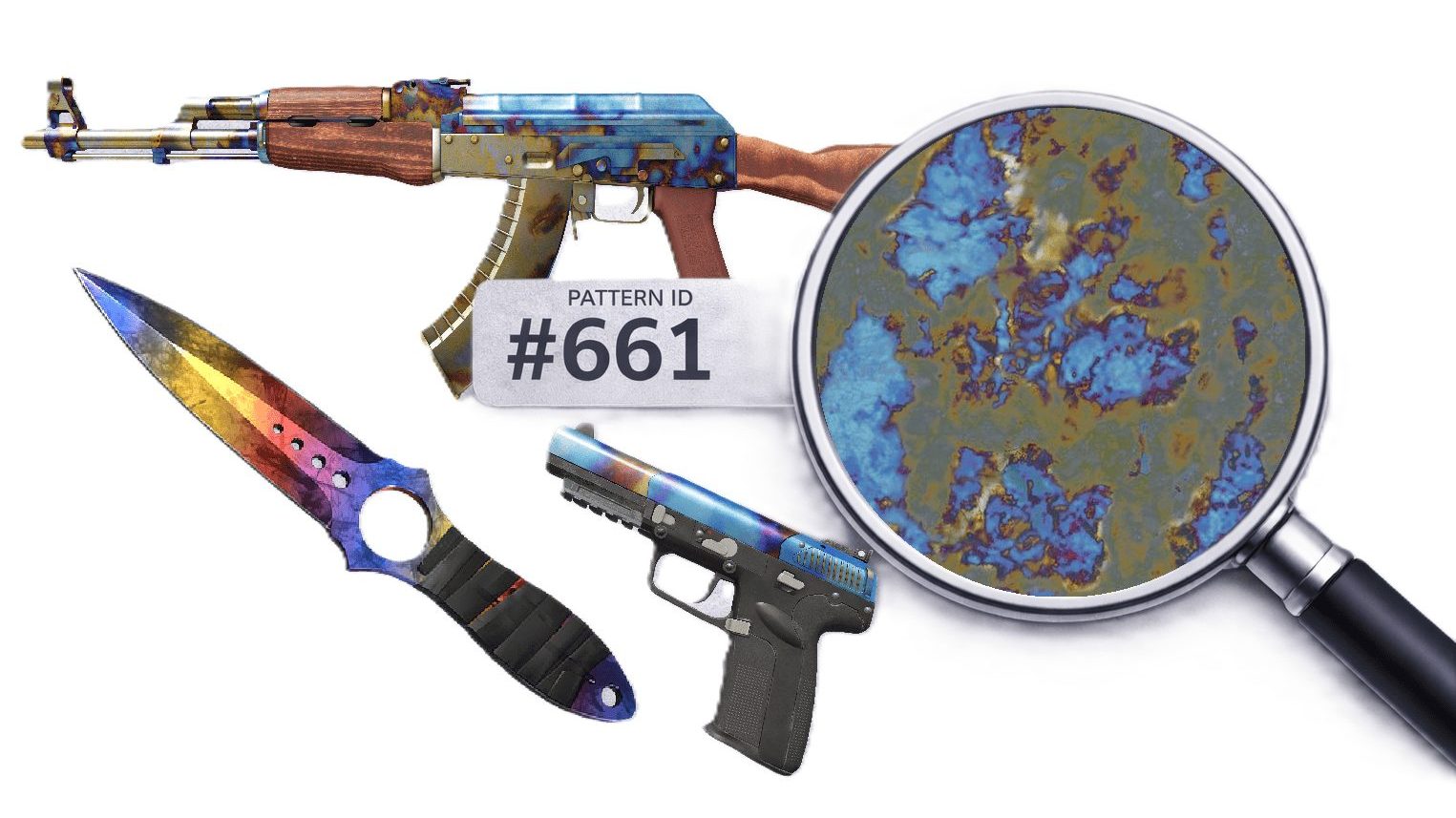
Some skins aren’t identical copies — they come with unique pattern variations. Skins like Case Hardened or Marble Fade use pattern indexes that change how the design appears.
Certain patterns are especially rare and highly sought after. These can dramatically increase a skin’s value, sometimes far beyond what rarity or condition alone would suggest.
Want to see how rare patterns like Blue Gems can massively increase value? Check out our guide on Case Hardened Blue Gem patterns in CS2.
This is why two skins with the same name and wear level can still have completely different prices.
StatTrak™: Extra Value, But Not Always
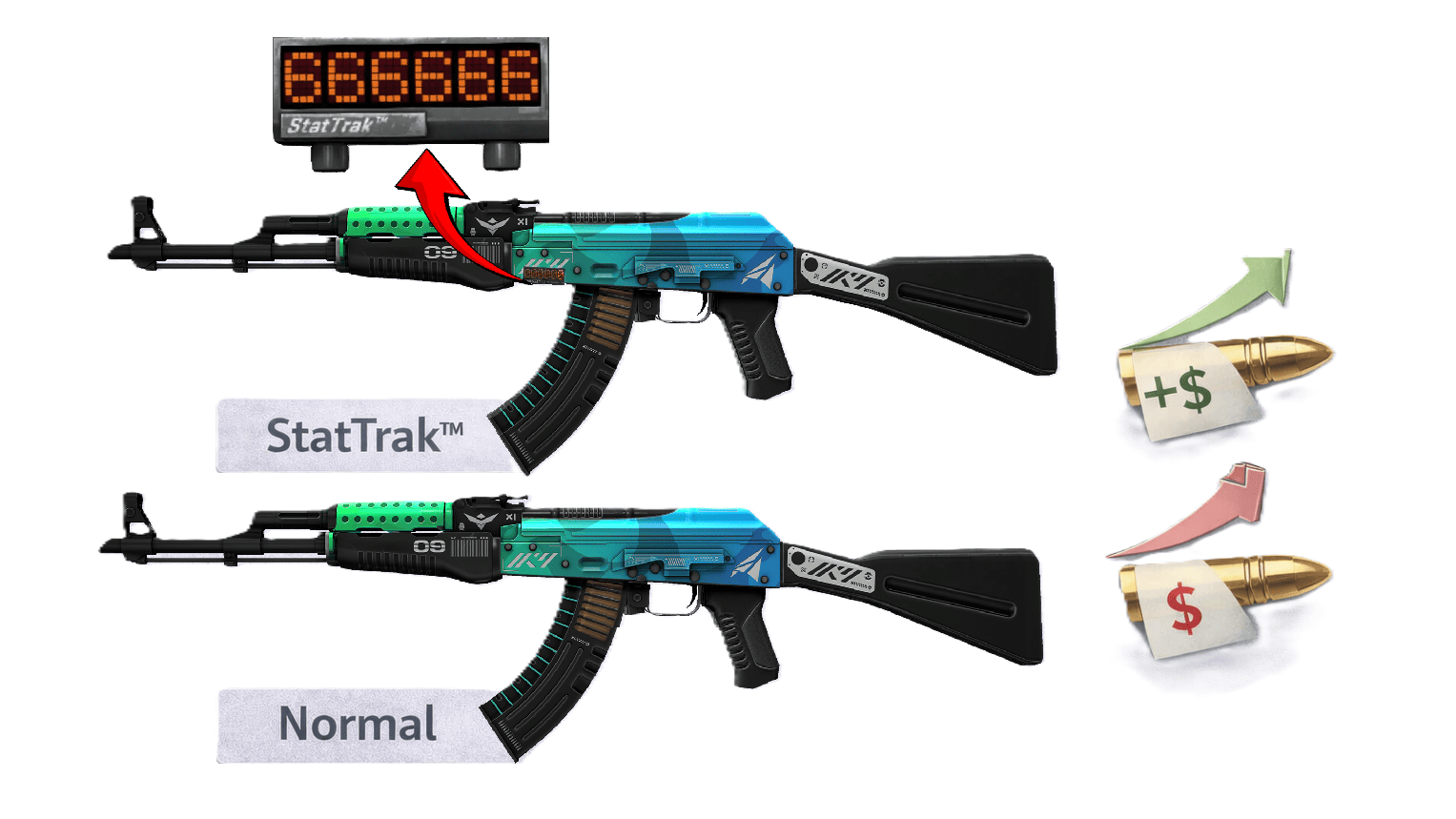
StatTrak versions of skins include a built-in counter that tracks kills. They’re less common than regular versions, which often makes them more expensive.
The price difference isn’t the same for every skin. On high-end items, StatTrak can add a noticeable premium, but on cheaper skins it often barely makes a difference. That’s why it’s better to treat StatTrak as a nice extra, not something that automatically makes a skin much more valuable.
Demand and Meta: Why Some Skins Stay Expensive
A skin’s price is heavily influenced by how often its weapon is used. Popular weapons like the AK-47, AWP, and M4A4 rifles are part of almost every match, which keeps demand for their skins consistently high.
The in-game meta plays a big role in pricing, too. When a weapon gets stronger after an update, more players start using it, which can quickly boost demand for its skins. On the flip side, if a weapon becomes less popular, its skin prices tend to drop over time.
Simply put, a skin’s value is strongly linked to how relevant the weapon is in the current game.
Skin Finish and Visual Appeal
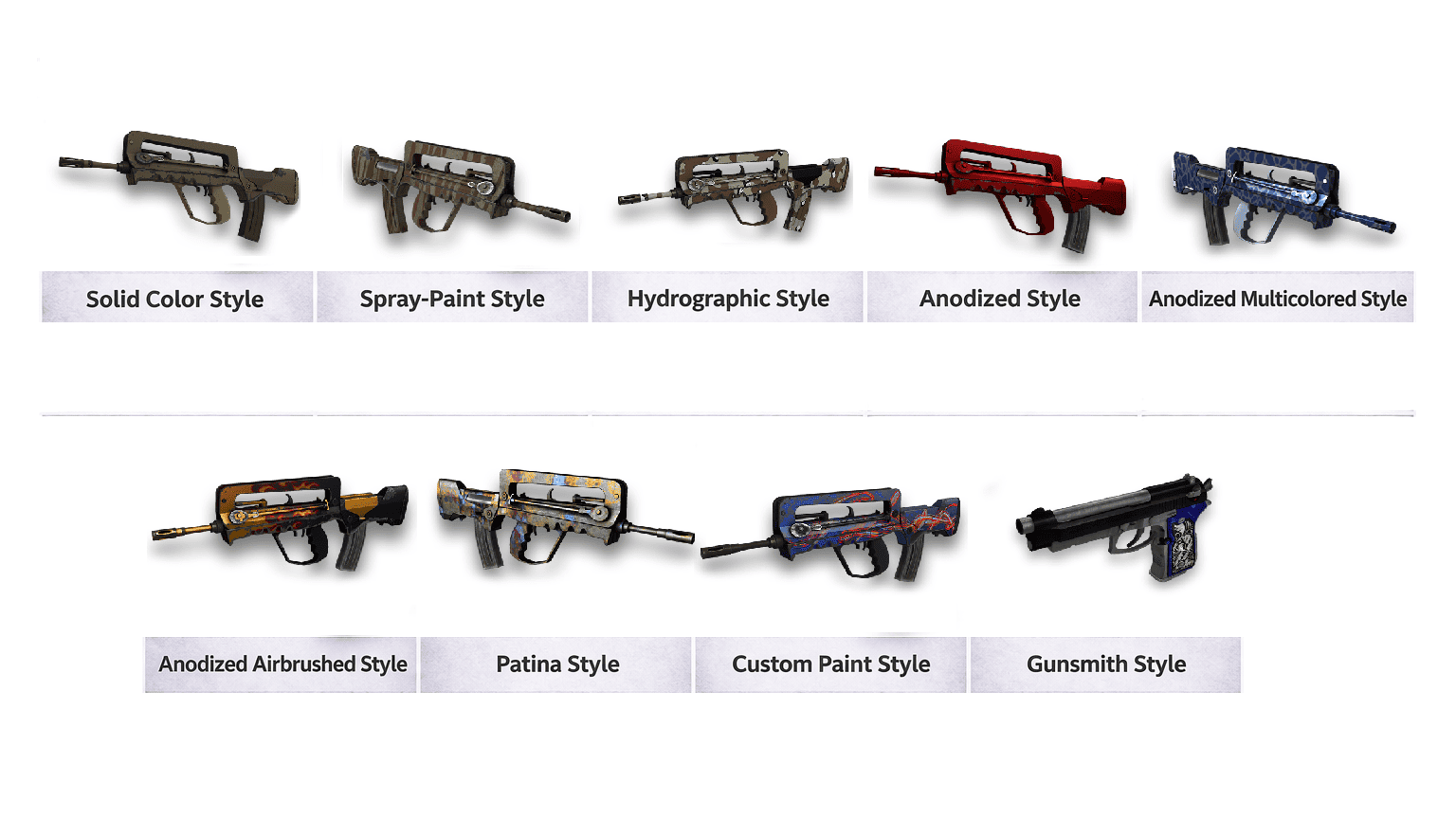
The way a skin looks still plays an important role, especially when it comes to attracting buyers. Some finishes stand out more due to their colors, animations, or overall design. The CS2 game features 9 finishes: Solid Color, Spray-Paint, Hydrographic, Anodized, Anodized Multicolored, Anodized Airbrushed, Patina, Custom Paint and Gunsmith.
For a deeper breakdown of how finishes affect both appearance and price, check out our guide on most popular CS2 skin finishes explained.
Visually appealing skins tend to sell faster and reach a wider audience. However, appearance alone isn’t enough to drive high prices — it needs to be supported by demand and limited supply.
Case Availability: The Long-Term Price Driver
All skins come from a specific case or collection. When that case becomes harder to access, like when it’s removed from the active drop pool, the number of new skins entering the market starts to shrink. The example is CS:GO Weapon Case which currently costs around $170 and is not in an active drop pool.
Want to see how new releases impact supply and prices? Check out our overview of all new CS2 cases in 2026.
As supply goes down, prices often begin to rise, especially for skins that are already popular. This is why items from older or discontinued cases tend to become more valuable over time.
Additional Factors That Influence CS2 Skin Prices
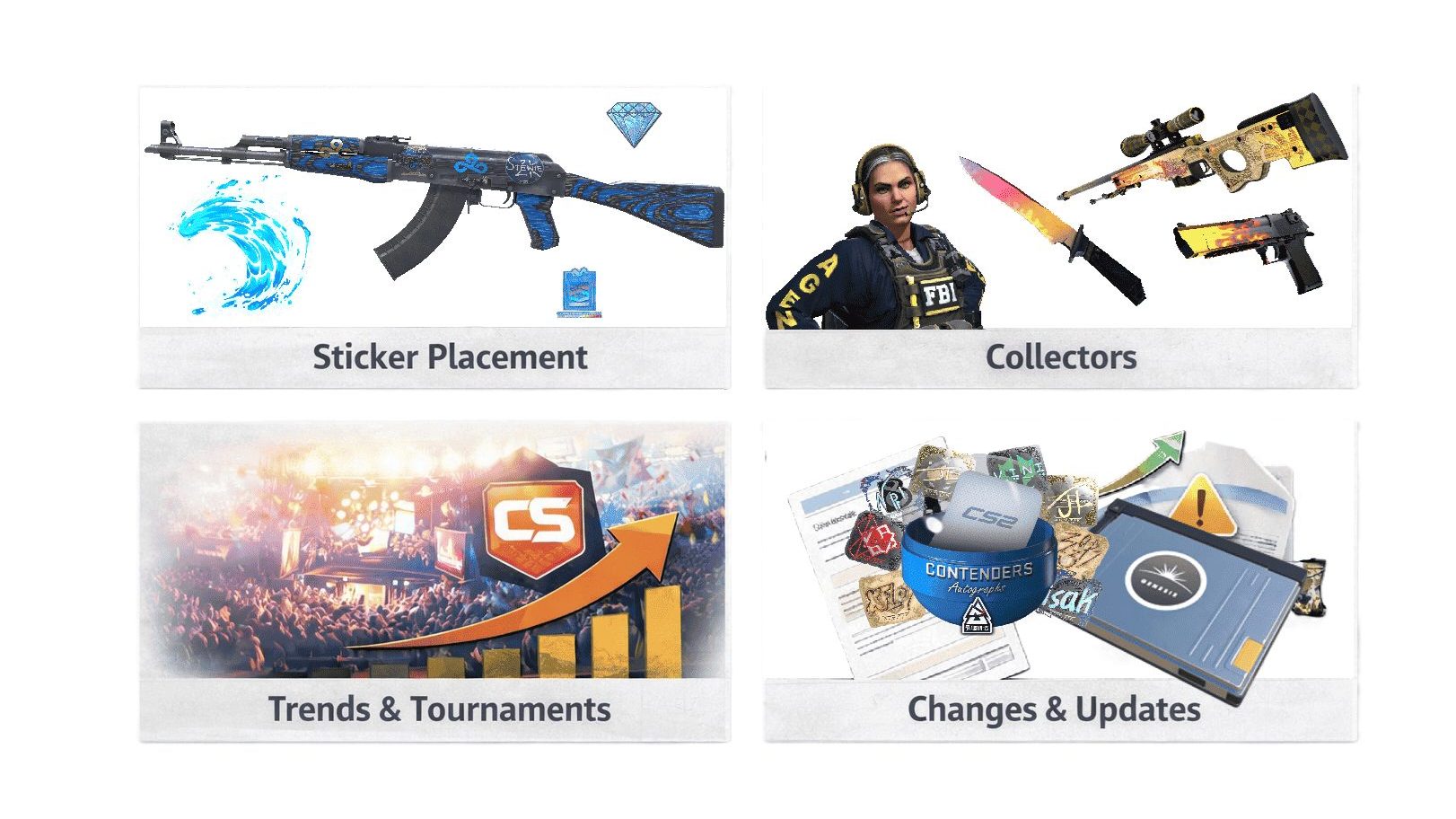
Besides the main factors, there are a few smaller details that can still influence a skin’s price. They’re easy to overlook, but they can make a real difference — especially if you’re trading or collecting.
Stickers and Sticker Placement
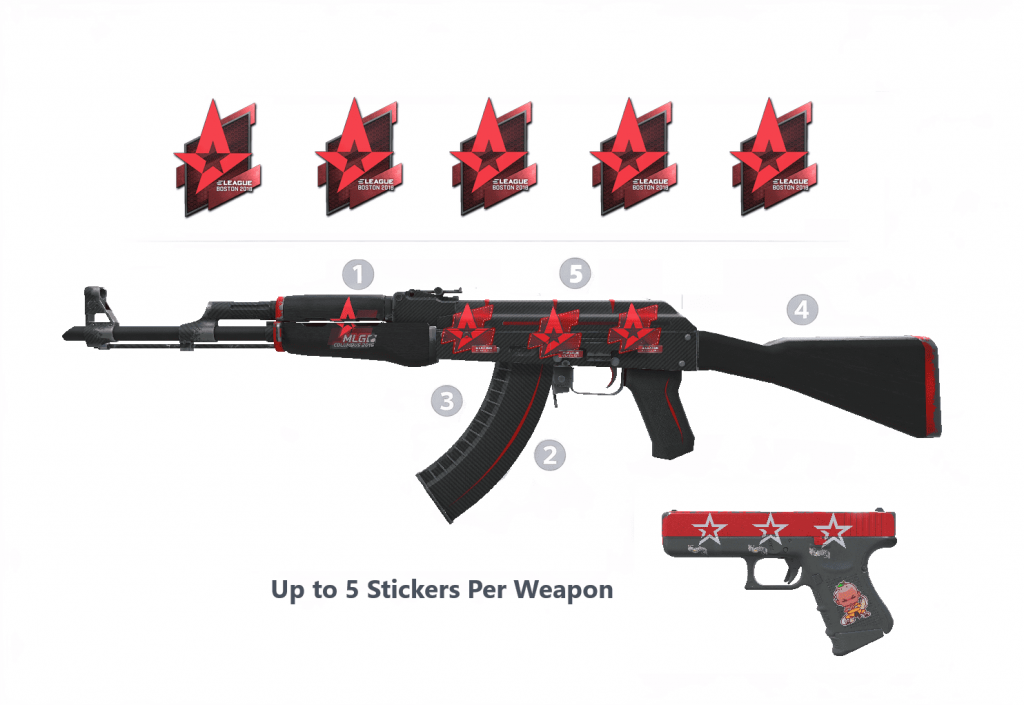
Stickers can noticeably boost a skin’s value, especially if they’re rare or no longer obtainable. Where they’re placed matters too — stickers in clean, visible spots usually make the skin more appealing and can increase its price compared to poorly positioned ones.
Looking for stickers that actually add value and match your skins? Check out our picks for the best green stickers in CS2.
One thing many newer buyers miss: stickers aren’t permanent. In CS2, you can remove a sticker from a skin — but removal destroys the sticker. You don’t “get it back” into your inventory.
That means two things when you’re pricing a craft:
- The sticker’s market price doesn’t transfer 1:1 into the skin price.
Even if a sticker is insanely expensive, buyers won’t automatically pay “skin price + sticker price,” because they can’t recover the sticker later. - Some crafts are valuable because they’re rare as a finished skin, not because the sticker can be extracted.
The collection like Titan (Holo) from EMS Katowice 2014 Legends capsule cost around $86,656.22 on skins marketplaces, imagine selling a skin with one of these stickers attached.
Age and Release Date
Older skins tend to gain value over time, especially if they come from cases or collections that are no longer available. As fewer of them remain on the market, collectors start to value them more, which can drive prices up.
For example AWP | Dragon Lore which comes from The Cobblestone Collection and costs $11,899.91 in Minimal Wear condition. The only way to get is currently is to buy on the market or open directly from Souvenir Packages like Atlanta 2017 Cobblestone or Boston 2018 Cobblestone which cost around $1,500.00.
Market Psychology and Hype
Not every price change follows pure logic. Trends, influencer videos, and big tournaments can suddenly boost demand and push prices up. These spikes are often short-term and don’t always reflect a skin’s real long-term value. Understanding this thing helps you avoid buying when prices are inflated by hype.
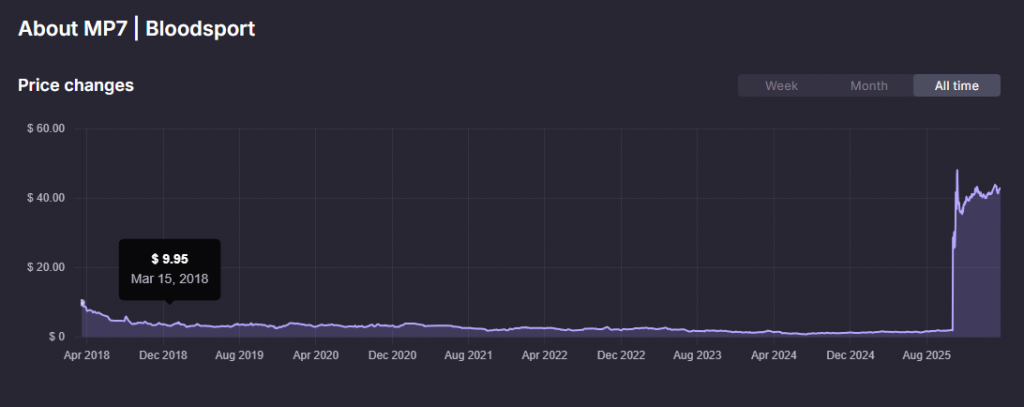
As an example, after Trade Up update, MP7 | Bloodsport grew in price from $1.97 to $43.40 because it more than suitable for re-craft to get skins like Sport Gloves | Amphibious or Sport Gloves | Vice and many others, which cost around $3,000.00 – $8,000.00 or even more.
Seller Behavior
Prices are also shaped by individual sellers. Some choose to hold their items until they receive a high offer, while others lower prices to sell quickly.
Because of this, the market isn’t always perfectly consistent — and the same skin can appear at different price points depending on the seller’s strategy.
How CS2 Trade Ups Set Price Floors
Trade-up contracts create steady demand for certain cheaper skins (“trade-up food”), which helps set price floors for many mid-tier items. Traders buy these inputs not because they’re popular to use in-game, but because they’re ingredients for upgrading into more valuable skins.
- How it works: you trade 10 skins of the same rarity to get 1 skin of the next higher rarity.
- Why prices move: if the next-tier outputs get more valuable, traders start buying the cheapest valid inputs. That buying pressure lifts those input prices until the trade-up stops being profitable.
- Extra lever: float matters—lower-float inputs can increase the chance of getting a better-wear output, so low-float “food” often costs more.
This mechanic plays a big role in shaping how CS2 skin prices work behind the scenes.
Why Prices Can Vary So Much (Real Example)
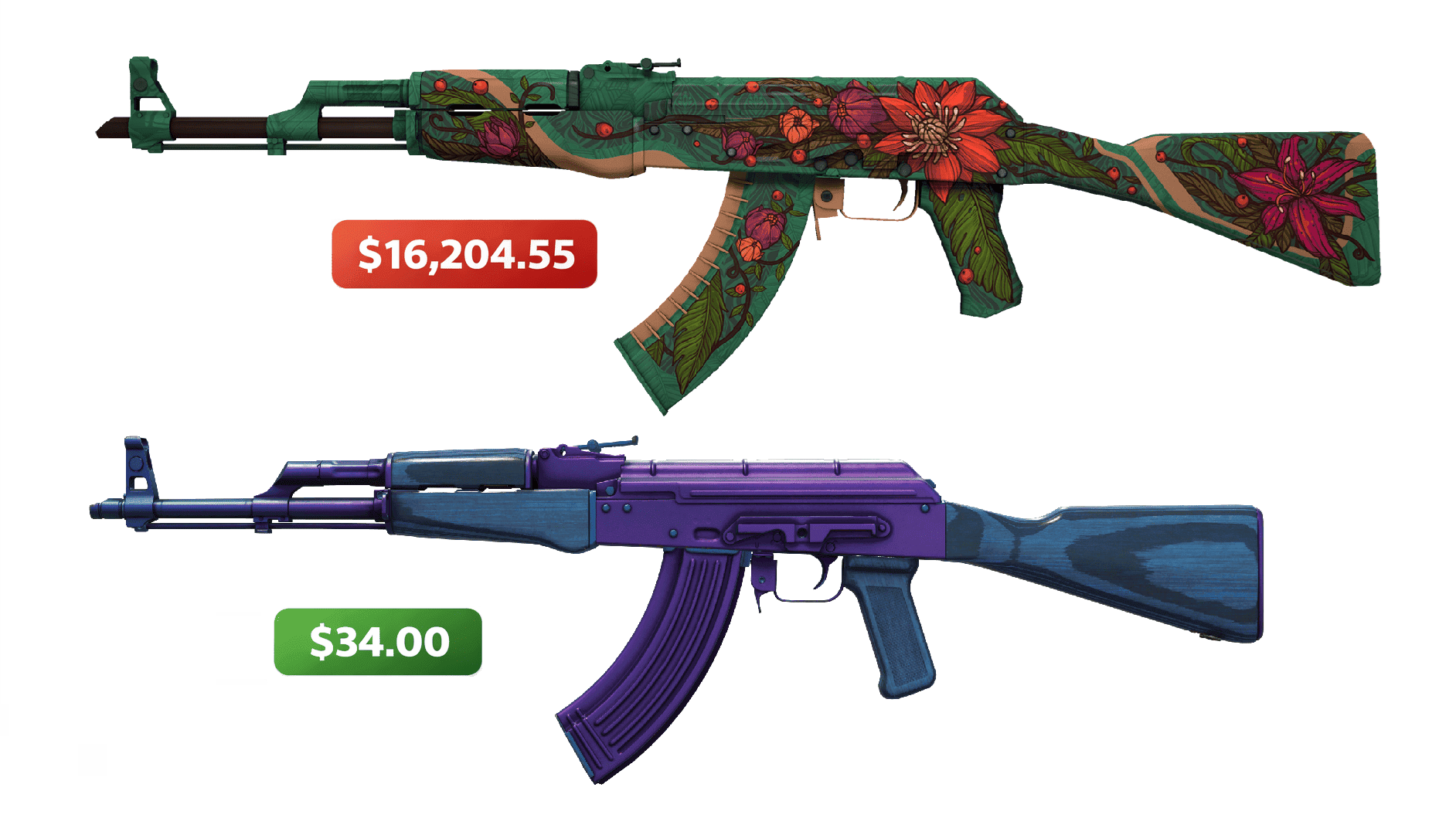
Take these AK-47 skins as an example:
- AK-47 | Wild Lotus — ~$16,204.55
- AK-47 | Midnight Laminate — ~$34.00
The gap isn’t random — it’s what happens when supply limits and collector demand stack on top of each other.
Wild Lotus is expensive because it’s not only a higher-tier skin — it’s also tied to a restricted supply source, meaning new units don’t enter the market as freely as common case skins. That creates a permanent scarcity effect: even when demand stays the same, limited supply keeps the floor high.
Then demand kicks in. High-end collectors chase “trophy” skins like Wild Lotus, which pushes prices up further because buyers are paying for status, uniqueness, and long-term collectibility — not just a nice finish.
Midnight Laminate is the opposite. It’s widely available, has a huge buyer pool, and sells in a market where lots of listings and frequent sales keep the price anchored and competitive.
One more important detail: attributes can multiply the gap even more. Wear/float (and sometimes crafts) can swing Wild Lotus pricing dramatically between two “identical” listings, while common skins usually move in smaller steps.
How to Estimate a Fair CS2 Skin Price
At a basic level, skin prices are the result of multiple factors interacting at once.
Rarity determines how limited a skin is. Float and pattern define its specific version. Demand affects how many people want it, while supply controls how many are available. On top of that, market behavior can push prices up or down in the short term.
When these elements align, prices rise. When they don’t, prices fall.
How Steam Market Fees Create a Price “Spread” for CS2 Skins
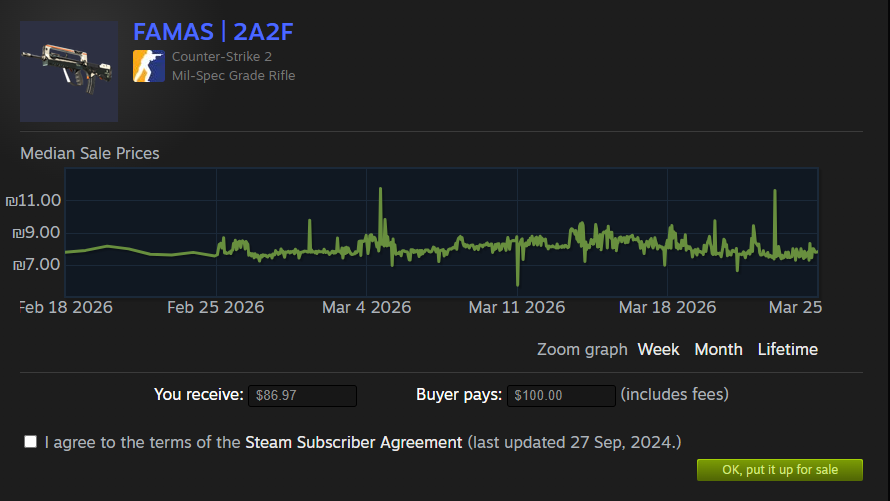
Steam prices often look higher because Steam takes a cut on every sale and pays sellers in Steam Wallet, not cash—creating a built-in “spread” vs third-party markets.
What the fee is: CS2 sales usually include ~15% total fees (5% Steam + 10% CS2 game fee). Your exact payout can vary slightly due to rounding/minimum fees.
Why third-party looks cheaper: those markets are cash-priced, often use different fee models, and compete across multiple platforms—so the same skin can list below Steam.
Rule of thumb: Steam price × 0.85 ≈ your Steam Wallet payout
- Example: Sell for $100 and receive ~$85 (buyer still pays $100)
What Causes CS2 Skin Prices to Change?
CS2 skin prices don’t move randomly — they react to player behavior and supply changes. When Valve updates the game, the meta can shift overnight. If a patch makes a weapon stronger (or more popular), demand for its skins rises fast, and prices often follow within hours or days.
Supply changes work the opposite way, but usually slower. If a case becomes harder to get or stops dropping, fewer new skins enter the market. Over time, that tighter supply can push prices up — especially for popular finishes.
Then there’s hype. Big tournaments, highlight moments, or a streamer suddenly showcasing a skin can create short-term “rush buying.” Those spikes can fade just as quickly once attention moves on.
That’s why the skin market is always in motion: patches reshape demand, drops reshape supply, and hype reshapes timing.
Final Thoughts: How to Avoid Overpaying for CS2 Skins
CS2 skin prices only look random until you know what you’re actually paying for. Most price swings come from a few repeatable forces: Steam fees, new (or reduced) supply from cases and drops, and item-specific details like float, patterns, and crafts.
Before you buy, anchor yourself to reality: check recent sales, not just the lowest listing. Then zoom in on what makes that exact skin different—float range, variant/pattern, StatTrak, and whether stickers add real buyer demand or just “sticker cost” on paper.
If you keep one rule, make it this: never pay a premium you can’t explain in one sentence. When you price the drivers (fees, supply pressure, liquidity, and variants) instead of the tag on the listing, you’ll buy cleaner, sell faster, and dodge most overpay traps.
CS2 Skin Prices FAQ (Everything You Need to Know)
Why are Factory New CS2 skins so expensive?
Factory New skins have the lowest wear, look the cleanest in-game, and are harder to find at desirable floats. That combination of scarcity + collector demand usually creates a premium.
Do stickers affect CS2 skin prices?
Yes. The impact depends on the sticker’s rarity, the skin it’s on, and placement/visibility. High-tier stickers in clean positions can add a real premium, while most common stickers add little.
Can rare patterns increase a CS2 skin’s price?
Yes. Pattern-based variants (like high Fade %, specific Doppler variants, or rare Case Hardened seeds) can be worth far more than the “average” version. Always verify the exact pattern/variant before pricing.
Why are CS2 skins cheaper on third-party sites than on Steam?
Steam takes a fee on sales and pays sellers in Steam Wallet, not cash. That creates a built-in Steam vs cash “spread,” so cash marketplaces often list the same item lower.
Are CS2 cases worth opening?
Usually not on average. Case openings are driven by rare jackpots, but most outcomes are common drops—so the expected value is typically worse than buying the item directly (even though big wins can happen).
Why do “trade-up food” skins rise in price?
Trade-ups create steady demand for certain mid-tier inputs. When a contract becomes profitable, traders buy the cheapest valid inputs, pushing those input prices up until the profit disappears.
